A Nose for Wood: How to Tell Solid Wood Scents Apart
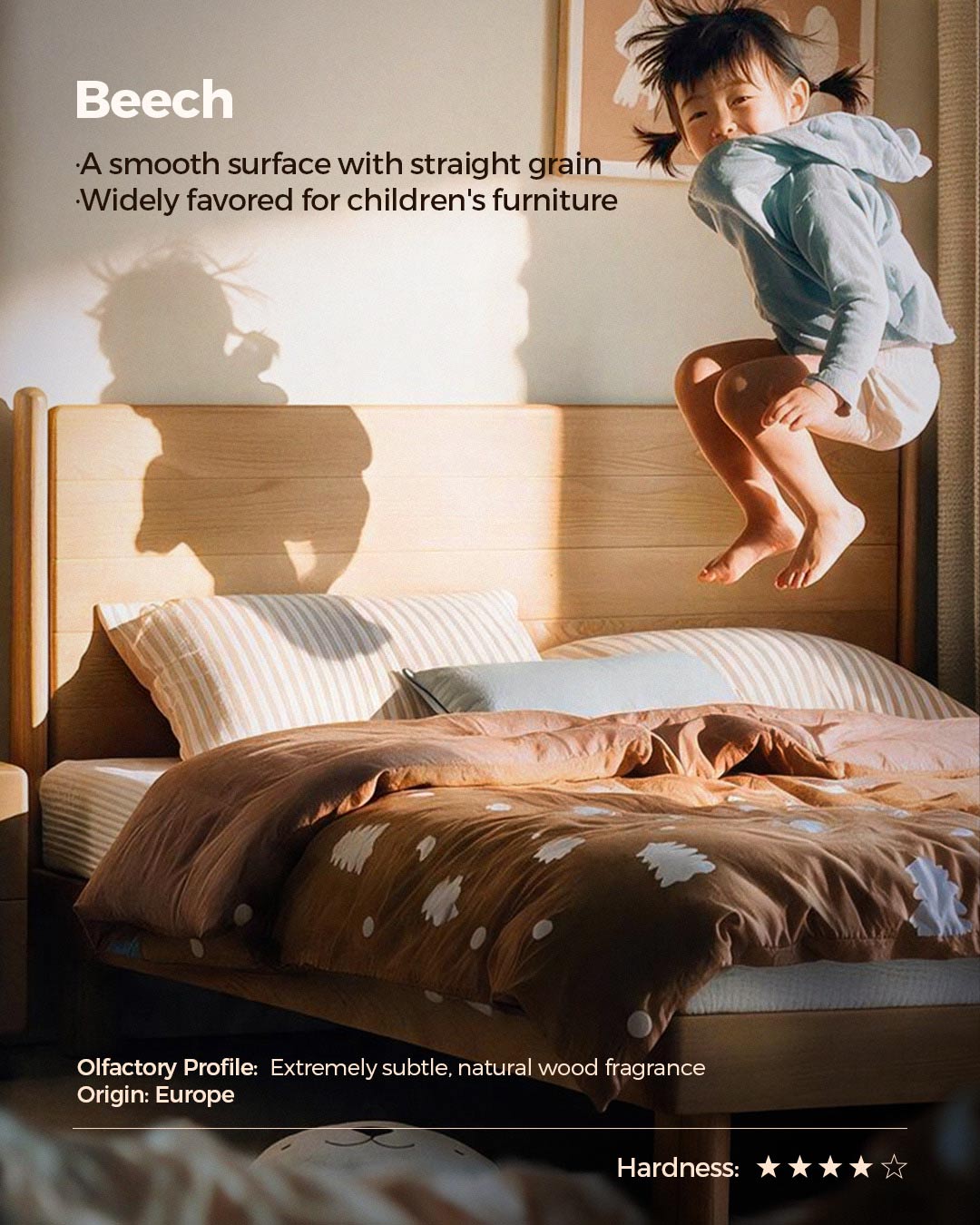
The short answer: Solid wood smells mild, natural, and faintly of the forest — loudest on a fresh cut, quieter once the wood has dried. Beech and ash are nearly scentless, oak and rubberwood carry a light acidic tang, and black walnut is warm and softly sweet. If a piece smells sharp or chemical, or still smells strong three weeks later, that's not the wood talking.
Why does wood smell at all?
Because wood is still a plant.
Even after it's milled and kiln-dried, it holds tiny amounts of volatile compounds — resins, oils, tannins, extractives — locked inside its cells. Cut into it and those cells open up. That's why a fresh cut smells far stronger than a finished tabletop.
Once the wood dries, gets sanded, and takes a finish, most of those compounds have already drifted off. What's left is a whisper.
Simple rule: the smell peaks at the sawmill, not in your living room.
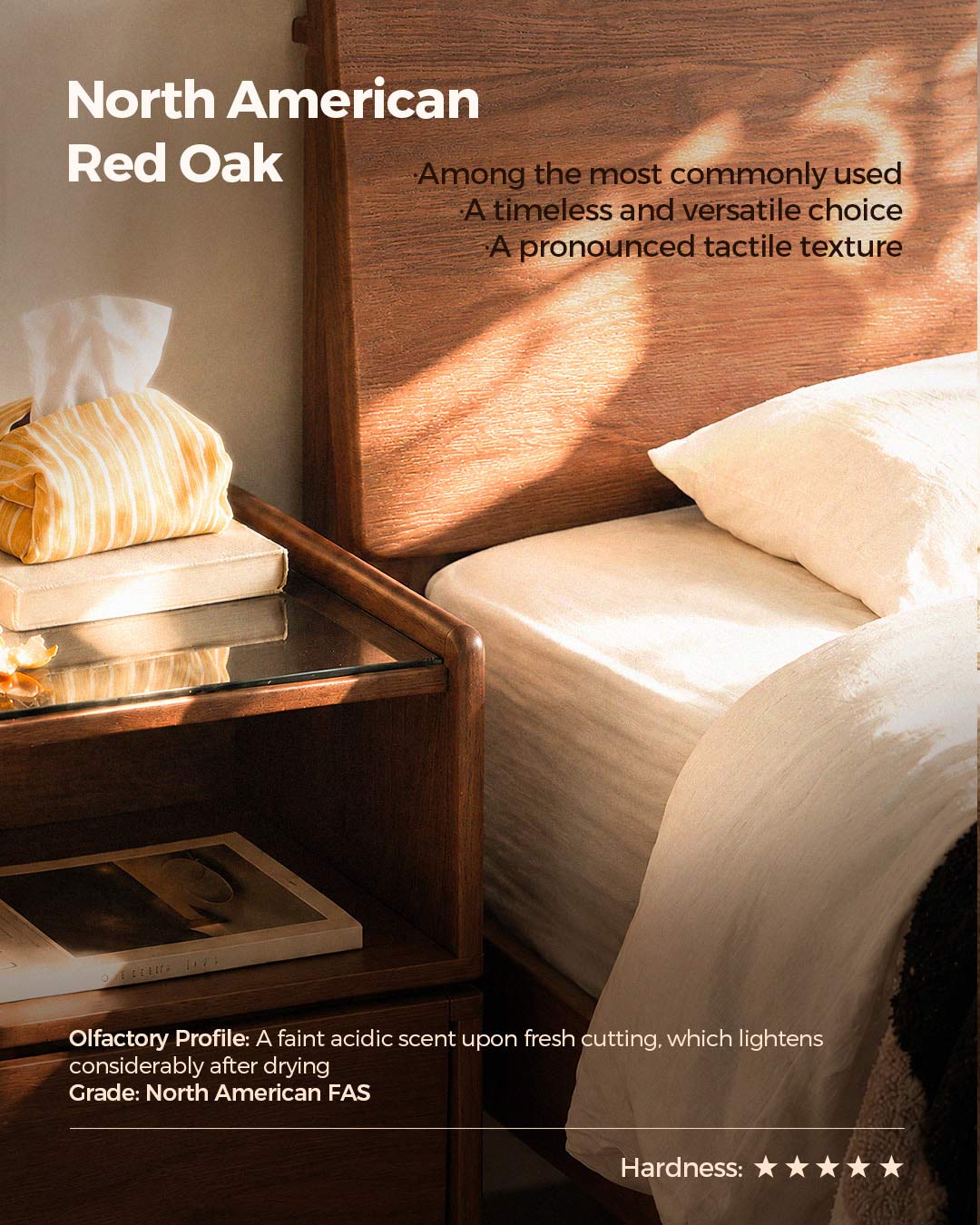
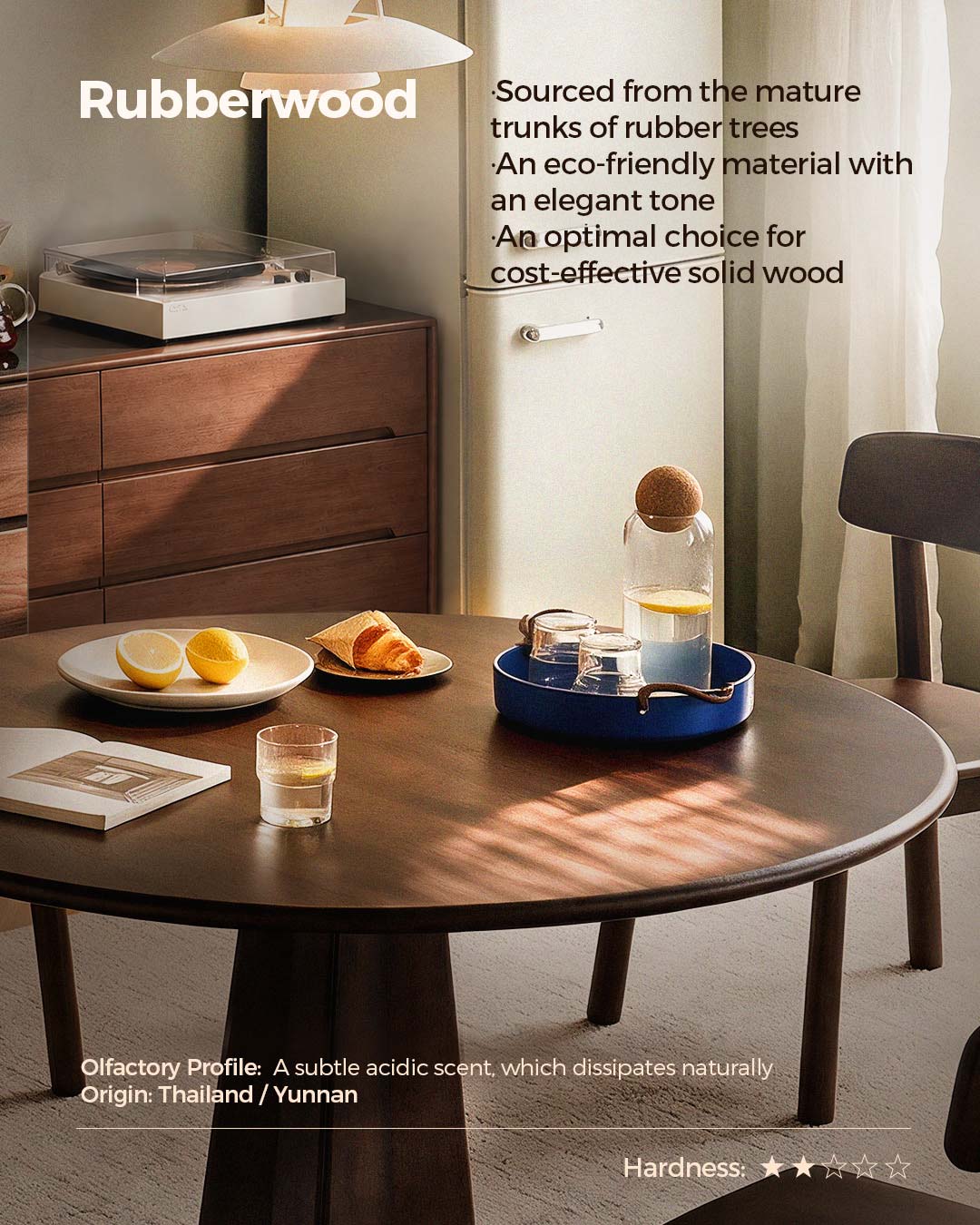
A light acidic tang. Rubberwood and red oak both carry a soft acidic note. It's most noticeable on a fresh surface, and it fades on its own — oak's fades considerably after drying, rubberwood's dissipates naturally. Neither is a defect. It's just tannins and natural acids doing their thing.
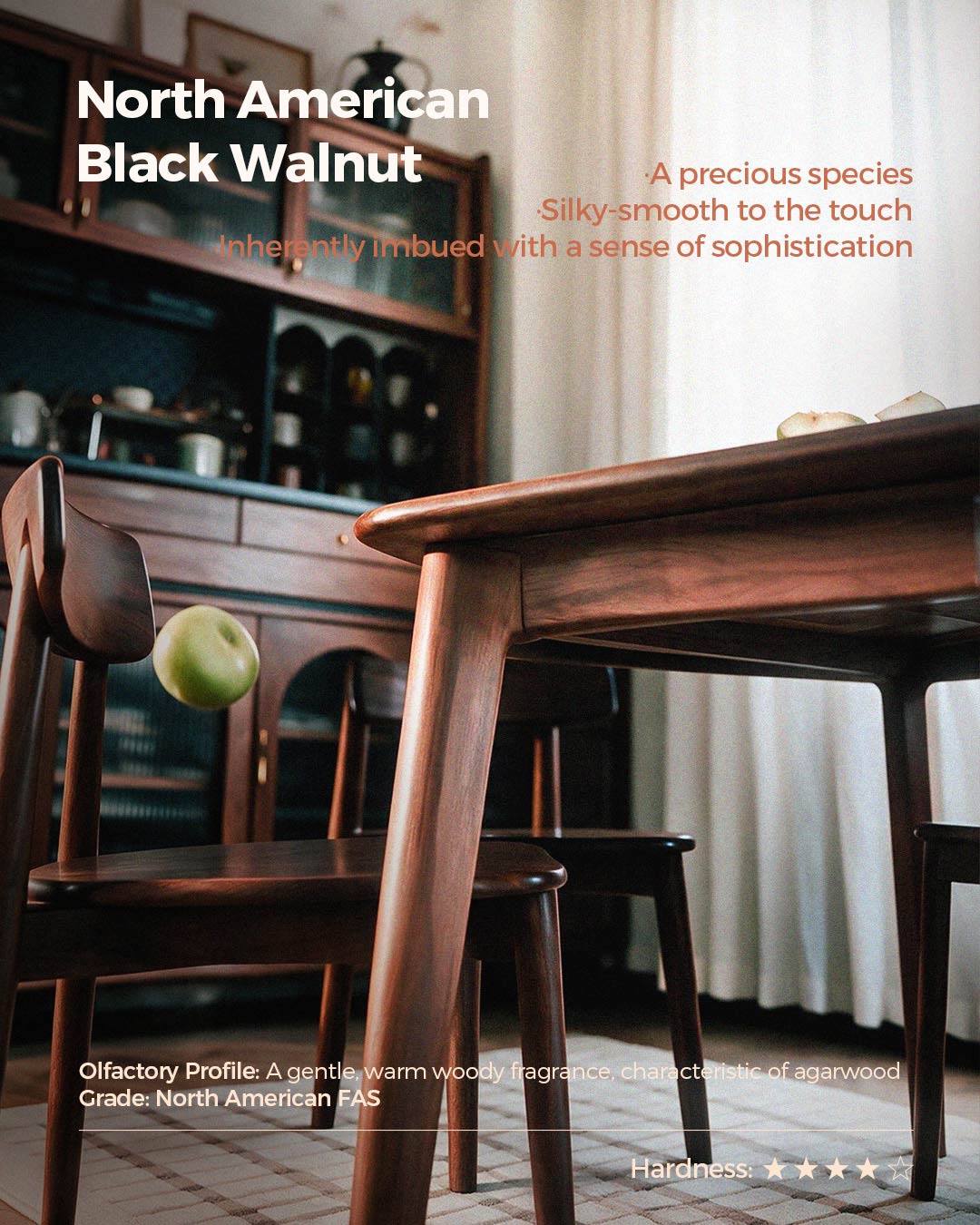
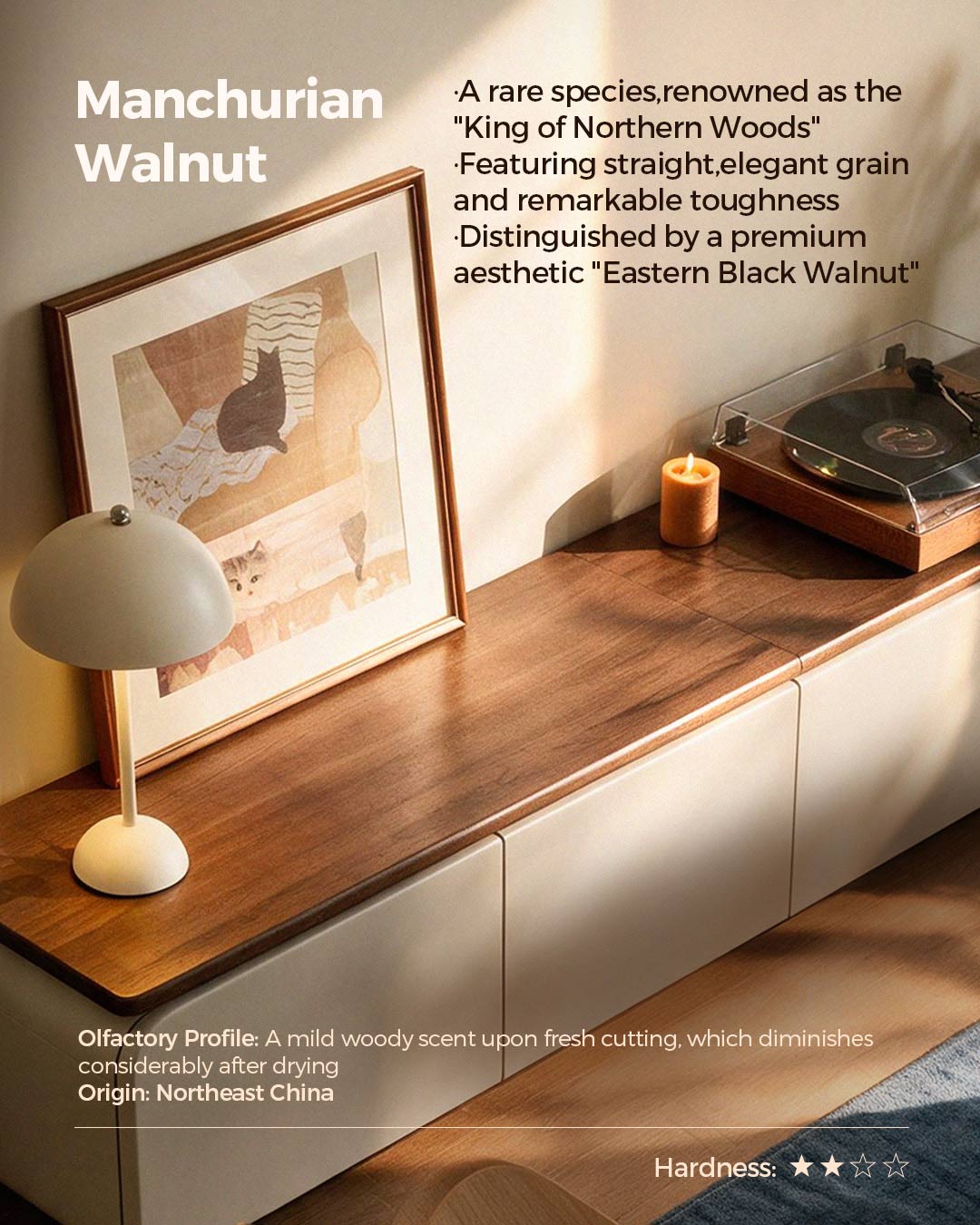
Warm and woody. Black walnut is the aromatic one — gentle, warm, and often compared to agarwood. Manchurian Walnut, the "King of Northern Woods," opens with a mild woody scent that quiets down a lot once the wood dries.
Natural wood smell vs. something's off
A natural wood scent is mild, fades over days to weeks, and smells like... well, wood. Slightly sweet, slightly green, sometimes a little tangy.
A warning smell is sharp, solvent-like or ammonia-ish, and stings your eyes or nose. If it's still going strong after three or four weeks of ventilation, you're likely smelling adhesives, finishes, or packaging — not the tree.
Can you identify solid wood by smell?
Honestly? No.
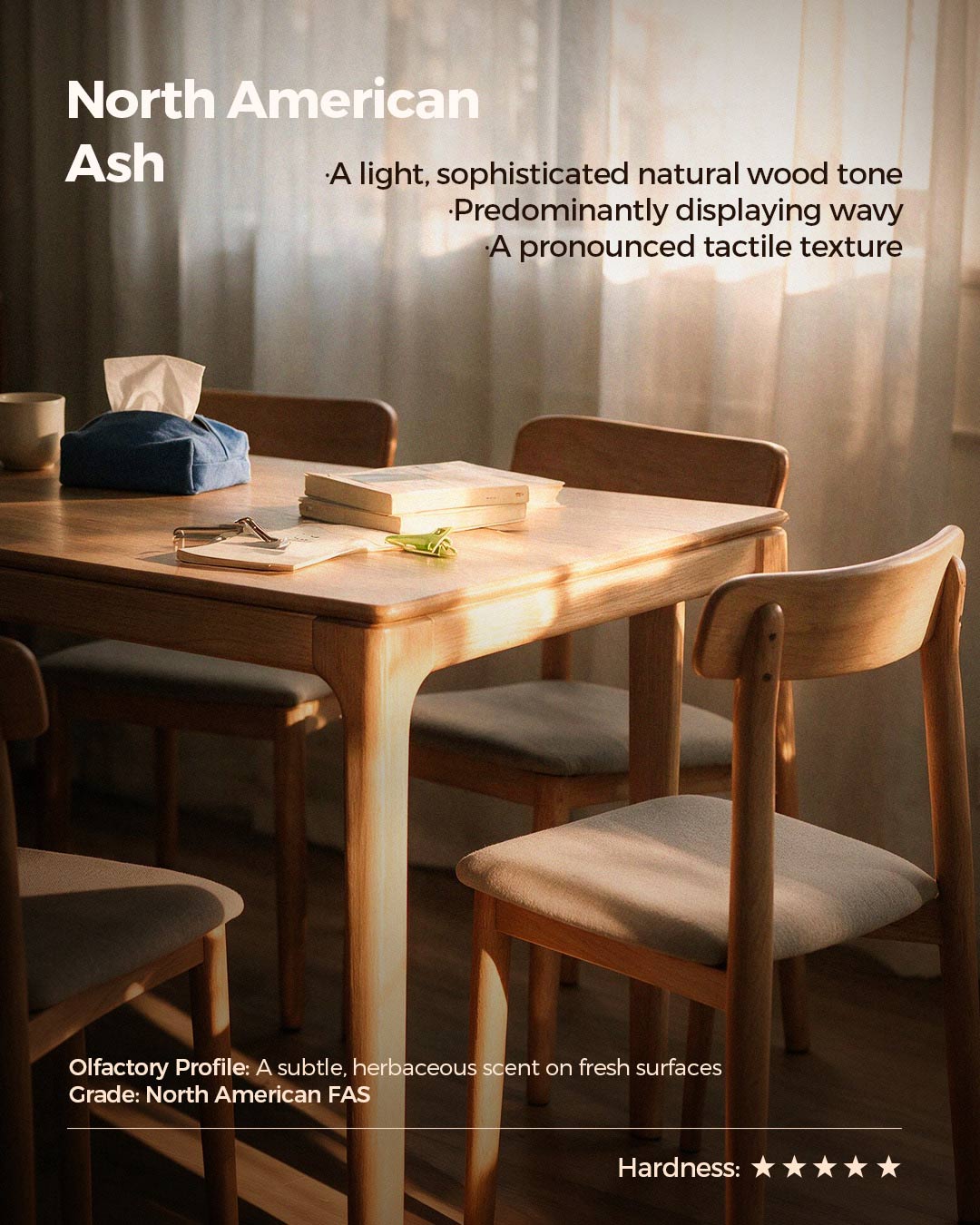
Smell is a hint, not a test. Veneered boards and finishes carry their own scents, and a strongly perfumed showroom piece can smell like anything. If you want real evidence, look at the end grain (solid wood shows growth rings running through the board's thickness), check the weight, and follow the grain across a joint — it should continue, not repeat.
Use your nose as a first impression. Use your eyes for the verdict.
FAQ
Q:Should new solid wood furniture smell?
A:Yes, faintly. Most pieces smell mild and settle within days to a couple of weeks. Air the room out and it goes faster.
Q:Why do some pieces smell stronger than others?
A:Freshness, how tightly it was wrapped, and species. Oak and rubberwood release more acidic volatiles than beech. A piece shipped straight from the workshop will be louder than one that's been sitting in a showroom.
Q:Does a strong wood smell prove it's solid wood?
A:No. See above — check the end grain, the weight, and the grain continuity instead.
Q:What smell should worry me?
A:Anything sharp, solvent-like, or ammonia-ish; anything that irritates your eyes or throat; anything still strong after a month of ventilation.
Q:Does the smell change over time?
A:It fades. Fresh cut is the peak. After drying and finishing, you're mostly smelling the finish, not the forest.
הַבָּא :
האמת על ריחות של ספת עור חדשהקטגוריות
הבלוג האחרון


אנחנו להתעקש על אישיות המותג של "צעיר, דינמי, מעניין, חדשני" מיצג "המותג הבחירה הראשונה עבור צעירים לקנות רהיטים בפעם הראשונה


אם אתה רוצה להיות שותף שלנו, אנא אל תהסס, הסיפור שלנו יתחיל במגע שלך
 A building, No.106 Kangtai South Road,Shatou,Jiujiang Town,Nanhai District, Foshan City,Guangdong Province,China
© זכויות יוצרים: 2026 Guangdong LINSY Home Co., LTD. כל הזכויות שמורות.

IPv6 רשת נתמכת


 עברית